Department of Robotic Surgery
Smarter Surgery Starts Here: Advanced Robotic & Minimally Invasive Care
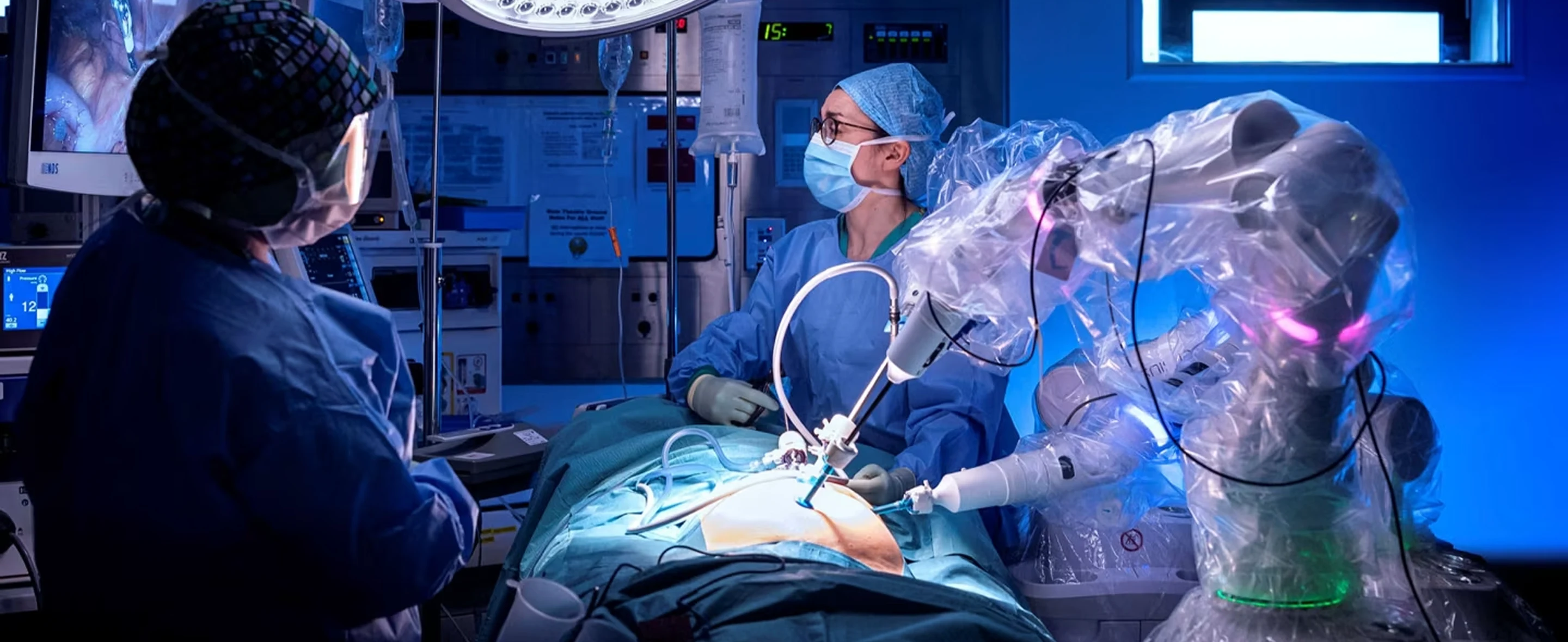
Robotic surgery is a type of minimally invasive or laparoscopic (small incision) surgery in which doctors utilize a computer controlled robot t o help them with specific surgical procedures. The robot's "hands" have a great degree of motions, allowing surgeons to operate in very small areas in the body that would typically require open (long incision) surgery.
Robotic and minimally invasive surgery has smaller incisions than open surgery (conventional surgery with incisions), resulting in less discomfort and scars.Using robotic technology, surgeons can execute difficult surgical procedures through small incisions.
Common Robotic Assisted General, Gastroenterology & Colorectal Surgeries
Cholecystectomy
Removal of the gallbladder
Gastric Bypass
Weight-loss surgery
Hernia Repair
Fixing a bulge in the abdominal/groin area
Appendectomy
Removal of the appendix, usually for appendicitis
Robotic Rectopexy
Fixing rectal prolapse (when the rectum slips out of place) using robotic assistance
Pancreatic Whipple
Removal of part of the pancreas, intestine, and bile duct to treat cancer
Pancreatic Tumour Resection
Removal of a tumour from the pancreas
Colorectal Surgery
Surgery on the colon and/or rectum
Abdominoperineal Resection (APR)
Removal of the rectum and anus
Lower Anterior Resection
Removal of the diseased lower part of the colon
What's the difference between open surgery and robotic surgery/minimally invasive surgery?
Between Robotic Surgery/Minimally Invasive Surgery (MIS) and Open Surgery, there are a number of differences, that includes:

Doctors perform minimally invasive surgery by creating small incisions, while open surgery requires a larger incision.
Compared to open surgery, minimally invasive surgery results in less trauma for patients.
Patients who have minimally invasive robotic surgery require less recovery time and can return to work sooner, whereas open surgery patients typically need more time to recover.
Minimally invasive robotic surgery leads to significantly less blood loss than open surgery.
There is less scarring with minimally invasive robotic surgery compared to open surgery.
Benefits of ROBOTIC SURGERY
The robot operates on its own.
No. The surgery is 100% controlled by your surgeon using a robotic system for better precision.
It's too new or risky.
Robotic surgery is clinically proven, safe, and used in leading hospitals worldwide, including India.
It's like traditional surgery.
It uses small incisions, meaning less pain, smaller scars, and faster recovery.
It's unaffordable.
Thanks to Indian innovations like the SSI Mantra Robot, it's now accessible and cost-effective.
Technology slows things down.
Robotic tools help your surgeon operate more efficiently, often reducing surgical time.
You can expect faster recovery, fewer complications, less blood loss, and a quicker return to daily life.